The Kind of Home Your Baby Enters Matters More Than You Think
Many parents prepare for a baby by focusing on visible milestones: the anatomy scan, the due date, the hospital bag, the stroller. These steps matter. Yet research in early childhood development consistently points to something less obvious but more influential — the environment a baby enters from the very first days of life.
The home does not need to be large, perfectly organised, or filled with specialised equipment. What shapes early development most is the emotional tone, physical safety, and predictability of the space surrounding the child.
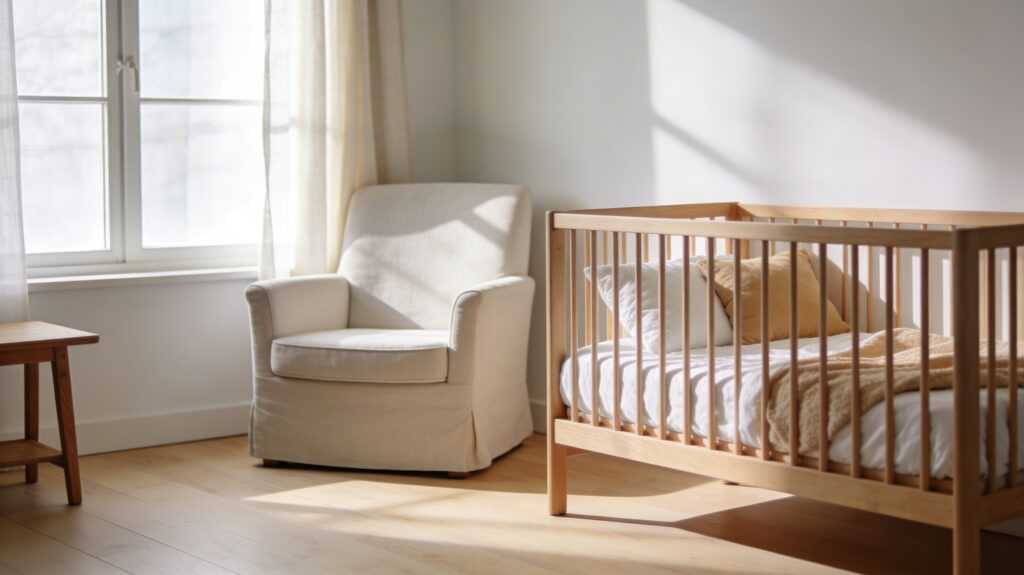
The Harvard Center on the Developing Child explains that early experiences literally help build the architecture of the brain. Neural connections form rapidly during the first years, and everyday interactions with caregivers play a central role in that process.
This does not mean parents must engineer a “perfect” home. It means small, practical decisions made before birth can quietly support a child’s long-term development.
Why the Home Environment Matters From Day One
Long before a baby can speak or crawl, their brain is actively organising information. Sensory input, emotional signals, and repeated routines all contribute to how neural pathways strengthen.
According to the Harvard Center on the Developing Child, responsive interactions between adults and infants — sometimes described as “serve and return” — help build strong brain circuits that support learning, behaviour, and health.
In practical terms, this refers to simple moments:
- A parent responding to a cry
- Eye contact during feeding
- Gentle conversation while changing a diaper
- Predictable sleep routines
None of these require expensive preparation. They require presence and a home environment calm enough to support repeated, attentive care.
Safety Is Developmental, Not Just Protective
Safety is often framed as preventing accidents — covering outlets, securing furniture, installing smoke alarms. These steps are essential, but safety also supports development in less visible ways.
When caregivers feel confident that a space is secure, they tend to interact more calmly. Babies, in turn, are highly sensitive to emotional cues.
The Centers for Disease Control and Prevention (CDC) notes that infants thrive when caregivers provide a stable and nurturing environment. Consistency allows babies to focus energy on growth rather than stress responses.
Early preparation reduces the cognitive load during the newborn phase, when sleep is limited and decision-making becomes harder.
Foundational Safety Steps Worth Completing Before Birth
- Set up a firm, flat sleep surface that meets current safety guidelines
- Check smoke and carbon monoxide detectors
- Anchor large furniture
- Ensure basic first-aid supplies are easy to access
- Plan safe pathways for nighttime movement
Completing these tasks early creates a quieter mental environment for parents as well.
Emotional Climate Shapes Early Brain Development
A baby does not evaluate décor, but they are highly attuned to emotional atmosphere.
Research summarized by the World Health Organization highlights that nurturing care — including emotional security and responsive caregiving — is essential for healthy early childhood development.
This does not imply that homes must be silent or free from stress. Every household has unpredictable moments. What matters more is the overall pattern: reliable comfort after distress, familiar voices, and caregivers who generally respond.
Parents often underestimate how strongly babies regulate themselves through adult support. A calm caregiver can lower an infant’s stress response within minutes.
Signals of a Supportive Emotional Environment
- Caregivers respond to cries rather than ignoring them
- Daily rhythms are somewhat predictable
- Voices are mostly gentle rather than abrupt
- Feeding and sleep happen without chronic urgency
Perfection is unnecessary. Repair after difficult moments is what builds trust.
You Do Not Need a Fully Equipped Nursery
Commercial messaging often suggests that babies require specialised rooms filled with products. Developmental research does not support this idea.
What newborns actually need is surprisingly limited:
- A safe place to sleep
- Reliable feeding
- Warmth
- Clean clothing
- Attentive caregivers
Many families across cultures begin with shared sleeping spaces or simplified setups. Healthy development occurs in a wide range of living environments.
Preparing a functional corner of a room can be more useful than attempting to complete an elaborate nursery late in pregnancy.
The Hidden Value of Predictability
Predictability is one of the most overlooked features of a supportive home.
Repeated patterns help infants begin to anticipate what happens next. Over time, this lowers stress and supports emotional regulation.
Predictability does not mean strict scheduling. Instead, it might look like:
- Lights dimming before sleep
- Similar feeding positions
- A short wind-down routine
- Consistent responses to night waking
These patterns gradually teach the brain that the environment is stable.
Prepare the Parent Environment Too
One practical insight often learned after birth is that the home must support caregivers as much as the baby.
Small adjustments can significantly reduce daily friction:
- Place feeding supplies in multiple locations
- Keep water bottles within reach
- Prepare simple frozen meals
- Organise changing essentials on each floor if applicable
- Create a comfortable place to sit during long feeds
When parents expend less energy searching for items, they have more capacity for responsive interaction.
Common Preparation Mistakes
Expectant parents often focus effort where it has the least developmental impact.
Over-prioritising aesthetics
A visually perfect nursery does not improve attachment or brain development.
Delaying practical setup
Waiting until late pregnancy can introduce unnecessary physical strain.
Accumulating rarely used items
Extra equipment can create clutter that makes daily care harder.
Ignoring caregiver comfort
An uncomfortable feeding chair will be noticed quickly at 3 a.m.
Function tends to outperform appearance in the newborn months.
What Research Suggests About Early Experiences
Early development begins well before birth. The CDC notes that the brain and spinal cord start forming in the first weeks of pregnancy, underscoring how early biological development begins.
After birth, the pace remains rapid. Positive experiences accumulate, and so do stressful ones. This is why experts consistently emphasise nurturing, stable environments rather than material preparation alone.
Importantly, supportive environments are not defined by income level or housing size. They are defined by interaction patterns.
A “Good Enough” Home Is Exactly That
Developmental psychology has long supported the idea of the “good enough” caregiver — a parent who responds most of the time, repairs missteps, and provides reliable care.
The same concept applies to the home.
A good enough home is one where:
- Basic safety is addressed
- Caregivers can rest
- Feeding is manageable
- Emotional responses are usually warm
- Daily life is reasonably predictable
Babies do not benefit from parental exhaustion caused by unrealistic preparation standards.
Think in Systems, Not Rooms
Instead of asking whether a nursery is complete, a more useful question is: “Can daily care happen smoothly here?”
Consider how feeding, sleeping, soothing, and changing will work across a full day. Walk through the routines mentally. Many friction points become obvious during this exercise.
For example, a changing station located far from nighttime feeding areas often becomes inconvenient within the first week.
Systems thinking tends to reduce stress more effectively than last-minute adjustments.
The Environment Grows With the Child
No home setup is permanent. Babies quickly become rolling infants, then mobile toddlers.
This perspective can reduce pressure to get everything right immediately. Preparation is an ongoing process rather than a single deadline.
Start with what supports the newborn phase. Adapt gradually as developmental needs change.
Parents often report that flexibility — not perfection — is what ultimately makes a home feel supportive.
When viewed this way, preparing the home becomes less about achieving an ideal and more about creating a stable starting point for early relationships to form.
The environment a baby enters does not need to impress anyone. It needs to function quietly, support caregiving, and allow connection to unfold in ordinary daily moments.
Those ordinary moments are where development truly begins.
